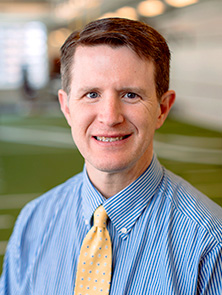
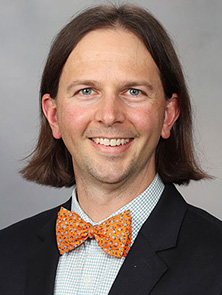
 Dr. Buus is the clinical education coordinator for the primary outpatient orthopaedic physical therapy location at Mayo Clinic in Rochester, Minnesota. Dr. Buus also serves as the residency coordinator and assistant program director for the Mayo Clinic Orthopaedic Physical Therapy Residency program and as a mentor and faculty for the Mayo Clinic Orthopaedic and Sports Physical Therapy Residency programs. He has academic appointment as assistant professor of physical therapy at Mayo Clinic College of Medicine and Science.
 /test01/channel_2/media/mccms/content-assets/academics/health-sciences-training/physical-therapy-orthopaedic-residency-minnesota/Ryan-Buus_512X512.jpg)
Ryan Buus, P.T., D.P.T, OCS
Board-Certified Clinical Specialist in Orthopaedic Physical Therapy

/test01/channel_2/media/mccms/content-assets/academics/health-sciences-training/physical-therapy-orthopaedic-residency-minnesota/PTOrtho_Curriculum1024X512.jpg)
The Physical Therapy Orthopaedic Residency is a full-time, 54-week program. You experience 1,500 hours of clinical practice, including over 150 hours of individual mentored time from highly trained and board-certified physical therapists and over 300 education hours.
Didactic and laboratory education, including manual therapy psychomotor skill acquisition, is integrated throughout the curriculum and modeled after the orthopaedic physical therapy description of residency practice in the following modules:
Foundations module
Spine module
Upper quarter module
Lower Quarter Module
Additional content module
Other curriculum content and directed learning activities include assisting with teaching lectures and laboratory coursework, clinical mentoring and teaching physical therapy students, simulation center and cadaveric anatomy lab experiences, and observing other medical specialty practices.
Requirements for residency completion include presenting at outpatient study groups and educational grand rounds, completion of a department Evidence Informed Practice Document, as well as completing a final research project chosen from one of these options:
Mayo Clinic School of Health Sciences is committed to developing and maintaining the best education programs. The curriculum and other aspects of this program are routinely assessed and changed as necessary to ensure the highest quality training.
For the majority of the residency, the learning schedule is 8 a.m. to 5 p.m., Monday through Friday. When rotating through the sports medicine center, residents have patient care responsibilities in the evenings a few days a week. Independent learning and assignments occur outside of this time frame.
/0x0:512x512/test01/channel_2/media/mccms/content-assets/academics/health-sciences-training/physical-therapy-orthopaedic-residency-minnesota/Kuik_Matthew_512X512.jpg)
I selected Mayo Clinic for my residency training to have opportunities for clinical growth through excellent mentorship from a variety of expert clinicians in several settings (orthopedics, hand clinic, high-level sports), to expand my skills at teaching through lecturing and assisting with labs within the Mayo Clinic DPT Program, and to be a part of a rich history of healthcare innovation and collaboration at a world-renowned institution.
Matt Kuik, P.T., D.P.T.
Alumni (Class of 2023)
The Physical Therapy Orthopaedic Residency is coordinated and taught by the clinical, scientific, and technical staffs of Mayo Clinic. Faculty members are chosen for their commitment to teaching, as well as their clinical practice and research. Many are board-certified specialists in orthopaedics, sports, or hand therapy.
Ryan Buus, P.T., D.P.T, OCS
Board-Certified Clinical Specialist in Orthopaedic Physical Therapy
/test01/channel_2/media/mccms/content-assets/academics/health-sciences-training/physical-therapy-sports-residency-minnesota/faculty/darren_calley.jpg)
Darren Calley, P.T., DScPT, OCS
Board-Certified Clinical Specialist in Orthopaedic Physical Therapy
/test01/channel_2/media/mccms/content-assets/academics/health-sciences-training/physical-therapy-sports-residency-minnesota/faculty/Cherny_Chad_E_16MY.JPG)
Chad Cherny, P.T., D.P.T., SCS
Board-Certified Clinical Specialist in Sports Physical Therapy
/test01/channel_2/media/mccms/content-assets/academics/health-sciences-training/physical-therapy-sports-residency-minnesota/faculty/Jensen_Kimberly_N_18O.JPG)
Kim Jensen, M.S., P.T., C.H.T.
Board-Certified Hand Therapist
/test01/channel_2/media/mccms/content-assets/academics/health-sciences-training/physical-therapy-sports-residency-minnesota/faculty/Jensen_Mark_A_17S.JPG)
Mark Jensen, P.T., OCS
Board-Certified Clinical Specialist in Orthopaedic Physical Therapy
/test01/channel_2/media/mccms/content-assets/academics/health-sciences-training/physical-therapy-sports-residency-minnesota/faculty/corey_kunzer.jpg)
Corey Kunzer, P.T., D.P.T., SCS
Board-Certified Clinical Specialist in Sports Physical Therapy
/test01/channel_2/media/mccms/content-assets/academics/health-sciences-training/physical-therapy-orthopaedic-residency-minnesota/Paul-Yerhot_512X512.jpg)
Paul Yerhot, P.T., D.P.T., SCS-ABPTS
Board-Certified Clinical Specialist in Sports Physical Therapy
A hallmark of higher education excellence is the breadth and depth of information and experience provided to you by faculty and visiting experts. Each year, many prominent professors visit Mayo Clinic to lecture in their areas of medical and scientific expertise.
As a resident at Mayo Clinic School of Health Sciences, you are encouraged to learn from these valuable resources by attending all relevant conferences, lectures and seminars prepared for students, interns, residents, fellows and consulting staff.
Mayo Clinic's campus in Rochester, Minnesota, includes an extensive outpatient complex, Mayo Clinic Hospital — Rochester, and substantial research and education facilities. This Mayo Clinic site is among the largest, most advanced medical centers in the world.
As a resident, you spend the majority of your time at the outpatient orthopaedic clinic and also rotate through the hand clinic and sports medicine practice areas in downtown Rochester, Minnesota.
Mayo Clinic School of Health Sciences uses these evaluative tools:
Mayo Clinic's system of evaluation provides students and faculty with a comprehensive look at individual performance. This allows faculty and administrative staff to direct students who are experiencing academic difficulty to the appropriate support resources, including tutoring programs and counseling opportunities.