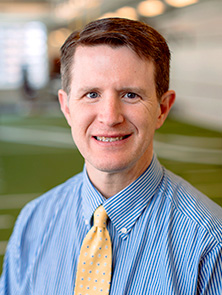
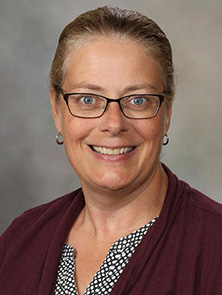
 Debra Ness P.T., DScPT, NCS has served as the residency coordinator since 2016, and the assistant program director for the Mayo Clinic Physical Therapy Neurologic Residency since 2022. Dr. Ness received her Bachelor of Arts from Concordia College in Moorhead, Minnesota, her Master of Physical Therapy from Mayo Clinic School of Health Sciences, and her Doctorate of Science from the University of Maryland, Baltimore. She received her neurologic clinical specialization in 2009 and recertification in 2019.
/test01/channel_2/media/mccms/content-assets/academics/health-sciences-training/physical-therapy-neurologic-residency-minnesota/BrandiBrian_512X512.jpg)
Brandi Brian, P.T., NCS
Board Certified Clinical Specialist in Neurologic Physical Therapy

/test01/channel_2/media/mccms/content-assets/academics/health-sciences-training/physical-therapy-neurologic-residency-minnesota/PTResNeuro_Curriculum_1024X512.jpg)
The Physical Therapy Neurologic Residency is a full-time, 54-week program. You experience more than 1,500 hours of clinical practice, including more than 150 hours of individual mentored time from highly trained and board-certified physical therapists and over 300 education hours.
Didactic and laboratory education is integrated throughout the curriculum and modeled after the neurologic physical therapy description of residency practice in the following areas:
Foundational classes
Acquired and traumatic brain injury topics
Spinal cord injury topics
Miscellaneous topics
Neurodegenerative disease/pediatrics/neurology topics
Requirements for residency completion include presenting at journal clubs and educational rounds, as well as completing a final research project chosen from one of these options:
Other curriculum content and directed learning activities include assisting with teaching lectures and laboratory coursework, clinical mentoring and teaching lectures, and observing other medical specialty practices.
Mayo Clinic School of Health Sciences is committed to developing and maintaining the best education programs. The curriculum and other aspects of this program are routinely assessed and changed as necessary to ensure the highest quality training.
For the majority of the residency, the learning schedule includes eight-hour days, five days a week. Independent learning and assignments may occur outside of this time frame.
/0x0:512x512/test01/channel_2/media/mccms/content-assets/academics/health-sciences-training/physical-therapy-neurologic-residency-minnesota/Martin-Ben512X512.jpg)
Mayo Clinic appealed to me for my residency training primarily because of the breath of neurologic patients here and the fantastic faculty that lead the program. Mayo allows its residents to be involved in clinical practice, teaching, and research, and has well over the required amount of mentorship, leading to a constant clinical development. The mentors work constantly to help you find great and unique learning experiences you might only find at Mayo.
Ben Martin, P.T., D.P.T.
Current Resident
The Physical Therapy Neurologic Residency is coordinated and taught by the clinical, scientific, and technical staffs of Mayo Clinic. Faculty members are chosen for their commitment to teaching, as well as their clinical practice and research. Many are board-certified specialists in neurology.
Brandi Brian, P.T., NCS
Board Certified Clinical Specialist in Neurologic Physical Therapy
/test01/channel_2/media/mccms/content-assets/academics/health-sciences-training/physical-therapy-neurologic-residency-minnesota/DarcyDalen_512X512.jpg)
Darcy Dalen, P.T., NCS
Board Certified Clinical Specialist in Neurologic Physical Therapy
/test01/channel_2/media/mccms/content-assets/academics/health-sciences-training/physical-therapy-neurologic-residency-minnesota/StaciEischen_512X512.jpg)
Staci Eischen, P.T., NCS
Board Certified Clinical Specialist in Neurologic Physical Therapy
/test01/channel_2/media/mccms/content-assets/academics/health-sciences-training/physical-therapy-neurologic-residency-minnesota/DebraNess_512X512.jpg)
Debra Ness, P.T., DScPT, NCS
Board Certified Clinical Specialist in Neurologic Physical Therapy
/test01/channel_2/media/mccms/content-assets/academics/health-sciences-training/physical-therapy-neurologic-residency-minnesota/HannahVonArb_512X512.jpg)
Hannah Von Arb, P.T., D.P.T., NCS
Board Certified Clinical Specialist in Neurologic Physical Therapy
A hallmark of higher education excellence is the breadth and depth of information and experience provided to you by faculty and visiting experts. Each year, many prominent professors visit Mayo Clinic to lecture in their areas of medical and scientific expertise.
As a resident at Mayo Clinic School of Health Sciences, you are encouraged to learn from these valuable resources by attending all relevant conferences, lectures, and seminars prepared for students, interns, residents, fellows, and consulting staff.
Mayo Clinic's campus in Rochester, Minnesota, includes an extensive outpatient complex, Mayo Clinic Hospital — Rochester, and substantial research and education facilities. This Mayo Clinic site is among the largest, most advanced medical centers in the world.
During the program, residents spend the majority of their time at Mayo Clinic Hospital — Rochester, Saint Marys Campus.
Mayo Clinic School of Health Sciences uses these evaluative tools:
Mayo Clinic's system of evaluation provides students and faculty with a comprehensive look at individual performance. This allows faculty and administrative staff to direct students who are experiencing academic difficulty to the appropriate support resources, including tutoring programs and counseling opportunities.