
Neuroscience Track
program completion rate
job placement rate

Guaranteed 5-year internal fellowship
includes full tuition, stipend and benefits
Advances in technology allow us to see and study the brain like never before, providing a panoramic view of the inner workings of the mind and how it works. By understanding the basis of learning, memory and other fundamental brain functions, researchers are at the cusp of a major paradigm shift in the way we treat, cure and even prevent nervous system disorders.
The Neuroscience Track within the Ph.D. Program at Mayo Clinic Graduate School of Biomedical Science brings together nearly 60 basic neuroscientists and clinician-scientists as faculty — each of whom have wide-ranging expertise and truly multidisciplinary research interests — to provide you with a unique educational experience.
Students in the Neuroscience track can freely choose from labs at the Mayo Clinic campuses in Jacksonville, Florida; Rochester, Minnesota; or Phoenix/Scottsdale, Arizona. This provides unparalleled instruction from top neuroscientists in subjects as diverse as neurodegeneration, neuroregeneration, biochemistry, cell and molecular biology, genetics, imaging, behavior, neuropathology, virology, pharmacology, stem cells and transplantation, deep brain stimulation, and clinical studies.
Ongoing research in this program includes:
- Alzheimer's disease
- Parkinson's disease
- Amyotrophic lateral sclerosis
- Multiple sclerosis
- Spinal cord injury and repair
- Neural regeneration
- Non-Alzheimer's disease dementias
- Neurogenetics
- Neuro-oncology
- Neuroengineering
- Neuroimaging
- Neuroinflammation
Curriculum
The Neuroscience Track places a significant emphasis on laboratory-based research training. Laboratory research is complemented with both core and track-specific courses, as well as advanced courses on current topics in neuroscience. These are taught in a tutorial format with small groups of faculty and students discussing cutting-edge research in areas such as neural development, neural aging, neurogenetics, addiction and electrophysiology.
In addition to regular coursework, you’re provided with institutional support for travel to advanced courses at such institutions as Cold Spring Harbor and the Marine Biology Lab. In your first year of the program, you’ll also have the opportunity to attend the annual Society for Neuroscience meeting (SfN).
/0x0:512x512/test01/channel_2/media/mccms/content-assets/academics/biomedical-research-training/phd-program/curriculumx2ftracks/NeuroscienceTrack_Rabichow_512X512.jpg)
Knowing the vast extent of research occurring across all three campuses, and the fact that I am now a contributing member of this community, is very exciting and gives me great pride. The impact that the investigators and their teams have had on the understanding and treatment of the world's most devastating diseases, is inspiring. The diversity of the Mayo research network removes limitations on the questions we can ask as scientists and the means to answer those questions.
Ben Rabichow
Ph.D. student, Neuroscience Track
/0x0:512x512/test01/channel_2/media/mccms/content-assets/academics/biomedical-research-training/phd-program/neuroscience-shue-francis-pic-tile.jpg)
Neuroscience is a burgeoning field that not all institutions have the resources to pursue. Mayo Clinic has a stronger translational facility than you see at other research institutions, and there’s so much potential to be able to work firsthand with patient samples.
Francis Shue
Ph.D. student, Neuroscience Track
/0x0:512x512/test01/channel_2/media/mccms/content-assets/academics/biomedical-research-training/phd-program/curriculumx2ftracks/NueroscienceTrack_Wang_512X512.jpg)
My PhD training at Mayo Clinic will definitely benefit my long-term career goal of becoming a physician-scientist. The close collaborations between clinic and lab have taught me how to define specific questions from clinical observation and then design experiments to investigate and answer those questions. I have no doubt that I’ll be well prepared to conduct translational studies after the rigorous training at Mayo Clinic.
Lingxiao Wang
Ph.D. student, Neuroscience Track
Your future
The Neuroscience Track has graduated more than 100 students, all of whom have gone on to successful careers in diverse areas such as academia, the pharmaceutical industry, scientific publishing and intellectual property. Our students and faculty publish at the highest levels and our scientific endeavors have made — and continue to make — a very real impact at the bench and in the clinic.
Meet the director
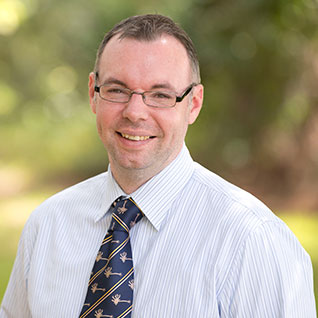
Welcome to neuroscience at Mayo Clinic, where we offer training for graduate students in a broad range of basic science, translational, and clinical laboratories conducting cutting-edge research with a focus on translating research findings into treatments for disorders of the nervous system.
The Neuroscience Track delivers a unique, interdisciplinary, educational experience with vibrant student populations at Mayo Clinic's campuses in Rochester, Minnesota; Scottsdale, Arizona; and Jacksonville, Florida.
Owen Ross, Ph.D.
Neuroscience Track Director
Associate Professor of Neuroscience
Phone: 904-953-6280
Email: ross.owen@mayo.edu
See research interests

Faculty
Browse a list of Neuroscience Track faculty members