
Biomedical Engineering and Physiology Track
active faculty members across 10 departments who are dedicated to this program

Guaranteed 5-year internal fellowship
includes full tuition, stipend and benefits
The human body is complex and fragile, at risk of developing any number of conditions like joint disease or nerve or muscle injury. As we age, body tissues break down and lose vital functions. Through studying the human body to understand how it works, biomedical scientist teams of engineers, clinicians and other scientists are at the front lines developing novel approaches to treat and prevent human illness.
The Biomedical Engineering and Physiology Track within the Ph.D. Program at Mayo Clinic Graduate School of Biomedical Science is built on a foundation of world-renowned research programs and courses with real-world relevance. Collaboration with faculty and clinicians from a wide variety of disciplines provide you with the support and guidance you need to succeed.
As a student, you’ll have several areas of emphasis to choose from:
- Biomechanics. Biomechanics involves the study of structure and function of biological systems and artificial tissue interactions using the principles of mechanics, material science and physiology. Some of the methods used include tissue scaffolding, materials testing, mechanical modeling, imaging of motion and joint mechanics.
Examples of recent projects include study of fracture mechanics in aging vertebrae, measurement of passive muscle stiffness in children with cerebral palsy, modeling of cartilage regrowth and postural analysis of wheelchair users.
- Biomedical imaging. Biomedical imaging advances the design and application of imaging techniques to improve disease diagnosis and staging, as well as treatment planning, delivery and assessment. The faculty and students at Mayo work in many modalities, including magnetic resonance imaging (MRI), X-ray computed tomography (CT), ultrasound, positron emission tomography (PET), radiation therapy and molecular breast imaging, as well as image processing and visualization and imaging informatics.
Relationships with industry allow access to the latest medical imaging technology before it is commercially available, and techniques developed here are often licensed by industry for use in future products.
- Molecular biophysics and biosensing. Molecular biophysics and biosensing applies principles of physics, chemistry and mathematics to study biomolecules that underlie function of cells, organs and organisms. Research interests include the structure and function of proteins and protein assemblies in live cells and model organisms with applications to ion channels, transporters, molecular motors, and biosensing technologies.
Strengths in basic and translational research include monitoring single biomolecule function in real time, linking protein dynamic motions to disease phenotypes, and biophysical and computational characterization of small molecule effectors targeting protein function in models of human diseases.
- Physiology. Physiology addresses complex biological systems from molecular and cellular to tissue and organismal principles that govern their function. An assortment of novel and state-of-the-art techniques and tools are used to investigate the mechanisms of diseases and novel pathways with therapeutic potential, as well as the engineering tools necessary to develop and optimize tissue and organ regeneration.
Physiology at Mayo integrates basic, clinical and translational research that builds on a strong tradition of "bench-to-bedside" and "bedside-to-bench" investigation. Studies are conducted on cell, tissue and animal models, including humans in the lab setting and even in the course of living their daily lives using innovative remote physiological monitoring tools.
Curriculum
The Biomedical Engineering and Physiology curriculum is designed to provide you with the knowledge and skills necessary to be successful in your research and future career. The curriculum focuses on an integrative approach to learning by applying engineering concepts in the context of physiological systems.
Years 1-2
Years 3-5+
/0x0:512x512/test01/channel_2/media/mccms/content-assets/academics/biomedical-research-training/phd-program/biomedical-engineering-physiology-marks-victoria-pic-tile.jpg)
I’ve had a number of mentors within the program, and each of them has had their own style. From daily walking chats to monthly talks over froyo, or physically dismantling and rebuilding equipment — each mentor has elevated my educational and research experiences at Mayo. My mentors have shown me that Mayo values me, and I have never felt embarrassed to come to any of them with questions or concerns.
Victoria Marks
Ph.D. student, Biomedical Engineering and Physiology Track
/0x0:512x512/test01/channel_2/media/mccms/content-assets/academics/biomedical-research-training/phd-program/biomedical-engineering-physiology-martinez-galvez-gabriel-pic-tile.jpg)
I appreciate the freedom the graduate school endows us with. I wanted to work on microbiology and molecular biology, but coming from a quantitative background, math and engineering education was important to me. The school was supportive on this. Even though I’m a Biomedical Engineering and Physiology student, I was given the liberty to choose a lab in the Biochemistry and Molecular Biology/Clinical and Translational Science department for my thesis.
Gabriel Martinez Galvez
Ph.D. student, Biomedical Engineering and Physiology Track
Your future
Many former Biomedical Engineering and Physiology students now hold faculty positions at leading universities (Stanford, Vanderbilt, Tulane, Ohio State, Washington University, University of Southern California and Mayo Clinic) and leadership positions in industry (General Electric, Siemens, Philips and Merck) and government (National Institutes of Health and Food and Drug Administration). Two are currently presidents of small companies.
Meet the leadership team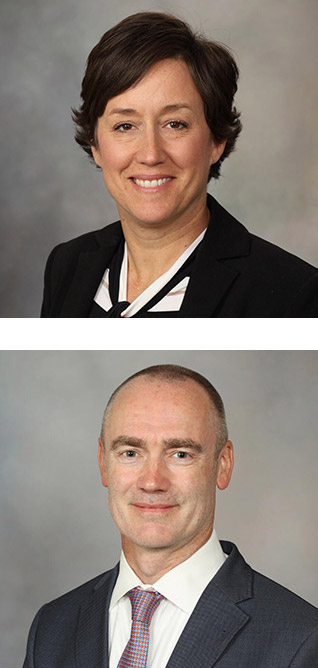
Welcome to our Biomedical Engineering and Physiology Track. Faculty in this track have a passion for student learners, extensive and innovative research expertise and laboratory staff, and cutting-edge equipment and facilities. This program provides a dynamic learning environment that emphasizes problem-solving, critical thinking, and communication skills.
The needs of the learner are met at Mayo Clinic through our integrated educational environment, built up upon collaboration across world-class education, research, and clinical teams who collaborate to solve complex medical issues across a spectrum from basic science studies to clinical trial.
Kristin Zhao, Ph.D.
Director, Biomedical Engineering and Physiology Program
Director, Assistive and Restorative Technology Laboratory
Director, Spinal Cord Injury Research Program
Senior Associate Consultant II, Physical Medicine and Rehabilitation, Physiology and Biomedical Engineering
zhao.kristin@mayo.edu
See research interests.
Leigh Griffiths, Ph.D., MRCVS
Assistant Program Director, Biomedical Engineering and Physiology
Consultant, Department of Cardiovascular Diseases
Consultant, Department of Physiology and Biomedical Engineering
Professor of Medicine, Mayo Clinic College of Medicine
griffiths.leigh@mayo.edu
See research interests.

Faculty
Browse a list of Biomedical Engineering and Physiology Track faculty members